
Cobb County Criminal Records at a Glance
A criminal record in Cobb County is not one file. It is many. An arrest creates a booking record at the Cobb County Adult Detention Center. A charge filed by the District Attorney or Solicitor General creates a court file. A conviction adds a disposition. A dismissal closes the file but may leave the arrest visible. Each piece lives in a different system. The Sheriff runs the jail data. The Superior Court Clerk holds felonies. The State Court Clerk holds misdemeanors and traffic cases. The Georgia Crime Information Center holds the formal rap sheet.
Most adult criminal records in Cobb are public. They can be searched online, in person, or by mail. Some records are restricted by law. Juvenile records, sealed adoption files, and restricted criminal history under O.C.G.A. § 35-3-37 are off limits to the public. The sections below cover where to look, what you can see, and what stays hidden.
For full criminal case files and dockets, see the Cobb County court records page. For active warrants, use the warrant records page. For people currently held in the jail, use the inmate records page.
How Cobb County Arrest Records Work
Cobb County arrests start with a police agency. The Cobb County Sheriff, Marietta Police, Smyrna Police, Kennesaw Police, and Georgia State Patrol all make arrests in the county. Once a person is booked, the file goes to the Cobb Sheriff. The Sheriff is the central hold point. The Adult Detention Center at 1825 County Services Parkway in Marietta is the jail. It is a pretrial facility. It also holds people serving short sentences.
The Sheriff publishes an inmate inquiry site at inmate-search.cobbsheriff.org. You can search by SOID, last name space first name, or serial number. Choose "In Custody" for people held now. Choose "Inquiry" for past bookings. The site shows charges, bond, OCGA code section, warrant number, case number, and release status. It does not show mugshots. The Sheriff stopped posting booking photos under O.C.G.A. § 35-1-19.
Arrest records show what police did. They do not prove guilt. A person arrested may never be charged. A person charged may never be convicted. Treat the arrest record as a starting point, not a verdict.
An overview of the Sheriff's office is shown on the Cobb Sheriff contact page with phone lines for jail, warrants, and records.
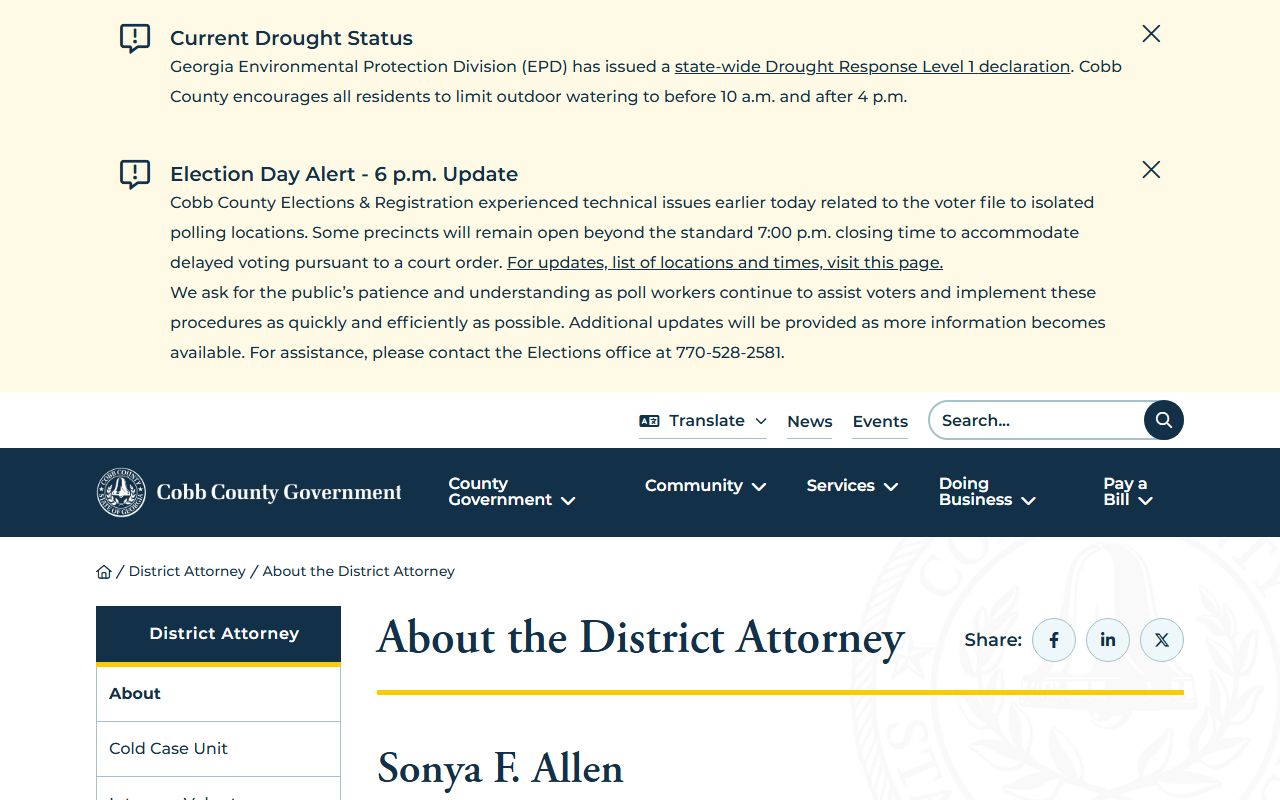
That page lists the DA office address and phone, and links into the units that actually move criminal files through Superior Court.
Cobb County Criminal Court Records
After an arrest, the prosecutor decides what charges to file. In Cobb, two offices prosecute. The District Attorney files felonies in Superior Court. The Solicitor General files misdemeanors and traffic charges in State Court. Once a charge is filed, the case becomes a court record. That record is held by the matching clerk.
Felony case files live with the Cobb County Clerk of Superior Court. The clerk runs the Superior Court WebCaseManagement system. You can search criminal cases by name, case number, or filing date. Results show parties, case type, status, and docket entries. Some documents need a paid checkout to view.
Misdemeanor and traffic case files live with the Cobb County Clerk of State Court. The State Court records search is at courts.cobbcounty.gov/StateCourtRecordSearch. It covers civil cases filed from March 17, 1997 and traffic and misdemeanor cases filed from April 26, 1999. Case numbers use the format 24-A-12345. Data refreshes nightly, so a case filed today may not show until tomorrow.
For Magistrate Court warrant applications and preliminary criminal matters, use the Magistrate Court Records Search. For full coverage of dockets and how to read them, see the Cobb County court dockets page.
Superior Court Felonies vs State Court Misdemeanors
Cobb has two main criminal trial courts. Superior Court handles felonies and death-penalty cases. State Court handles misdemeanors, traffic violations, and county ordinance cases. Knowing which court holds your case saves time.
| Superior Court | State Court | |
|---|---|---|
| Case Types | Felonies, divorce, equity, title to land | Misdemeanors, traffic, ordinance |
| Prosecutor | District Attorney (Sonya F. Allen) | Solicitor General (Makia Metzger) |
| Records Clerk | Clerk of Superior Court | Clerk of State Court |
| Search Portal | WebCaseManagement (sccweb.cobbsuperiorcourtclerk.com) | State Court Records Search |
| Case Number Example | Court-system generated | 24-A-12345 |
If you are not sure where a case sits, start with the Sheriff inmate inquiry to find the OCGA code section. Felony statutes route to Superior Court. Misdemeanor statutes route to State Court. You can then jump to the right clerk's portal.
Charges vs Convictions
People mix these up. A charge is an accusation. A conviction is the result of a verdict or guilty plea. Both can show up in Cobb County criminal records. They mean very different things.
| Charge | Conviction | |
|---|---|---|
| Stage | Filed by DA or Solicitor | Verdict, guilty plea, or no-contest plea |
| Proof Standard | Probable cause | Beyond a reasonable doubt |
| Where It Lives | Accusation, indictment, citation | Disposition, sentence, judgment |
| Public Record | Yes, unless sealed | Yes, unless restricted |
| Can Be Restricted Later | Yes, if not convicted | Limited, depends on offense |
A Cobb County arrest with a dismissed charge is not a conviction. But the arrest can still show up in a background check until it is restricted. That gap matters for jobs, housing, and licenses.
Cobb County Mugshots and Booking Photos
Cobb does not post mugshots online. The Sheriff stopped sharing booking photos to the public site under O.C.G.A. § 35-1-19. The inmate inquiry still has an Image column. It shows blank. The rest of the booking detail is still public. That includes name, DOB year, race, sex, location, SOID, days in custody, charges, OCGA code, bond, and release status.
If you need a mugshot for a legal matter, contact the Sheriff Records and ID unit at 770-499-4231. Mugshots may be released for certain official uses under the statute, but the Sheriff does not push them out to the open web. Third-party mugshot sites pull from old data or other counties. Treat any photo from those sites as unverified.
Record Restriction Under O.C.G.A. § 35-3-37
Georgia does not use the word "expungement" the way most states do. Georgia uses "record restriction." The rules sit in O.C.G.A. § 35-3-37. The state explains the process on Georgia Courts and on georgia.gov.
Restriction hides the record from public background checks. It does not destroy it. Police, courts, and prosecutors can still see the record. Most employers, landlords, and licensing boards cannot.
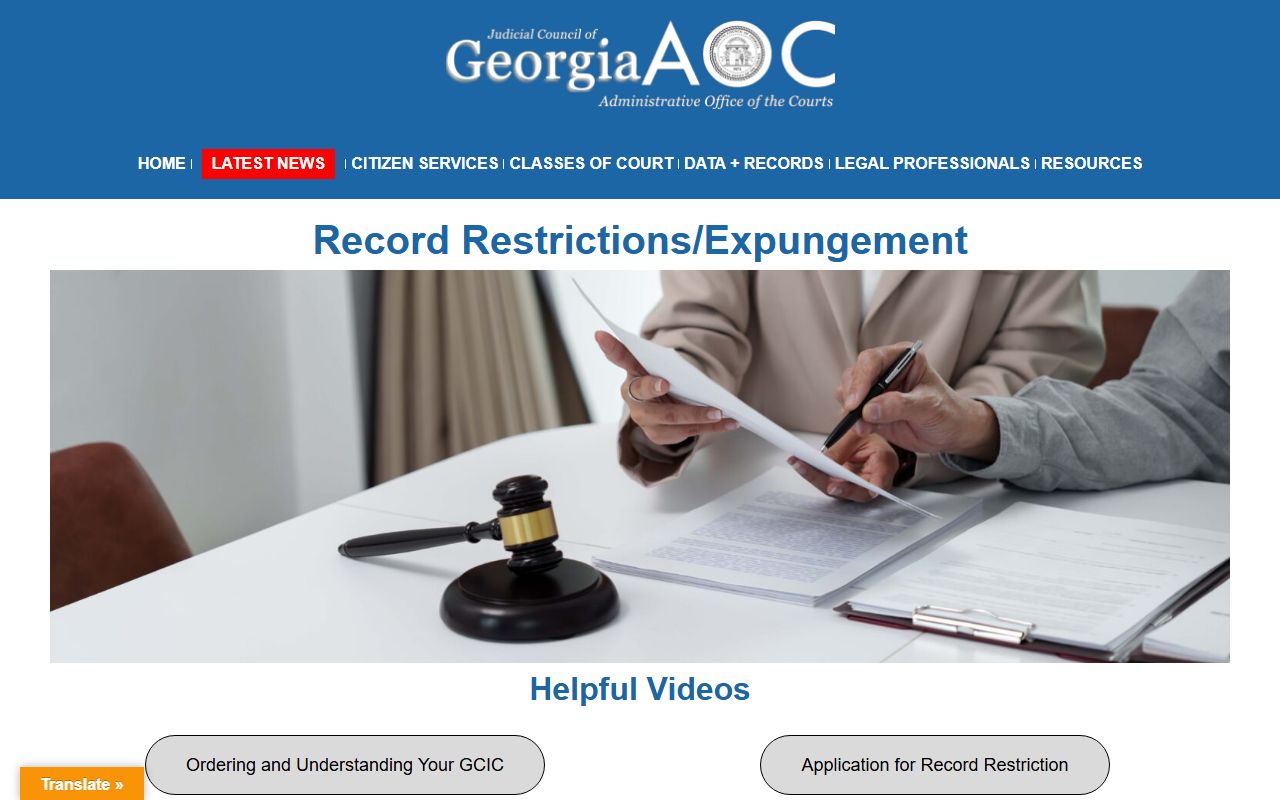
That guide is the best plain-English source for how the process moves between agencies.
Eligible records include arrests with no conviction, charges that were dismissed or nol prossed, some misdemeanors after a waiting period, and certain youth offenses. Not eligible: serious violent felonies, sex offenses against minors, and most DUI convictions.
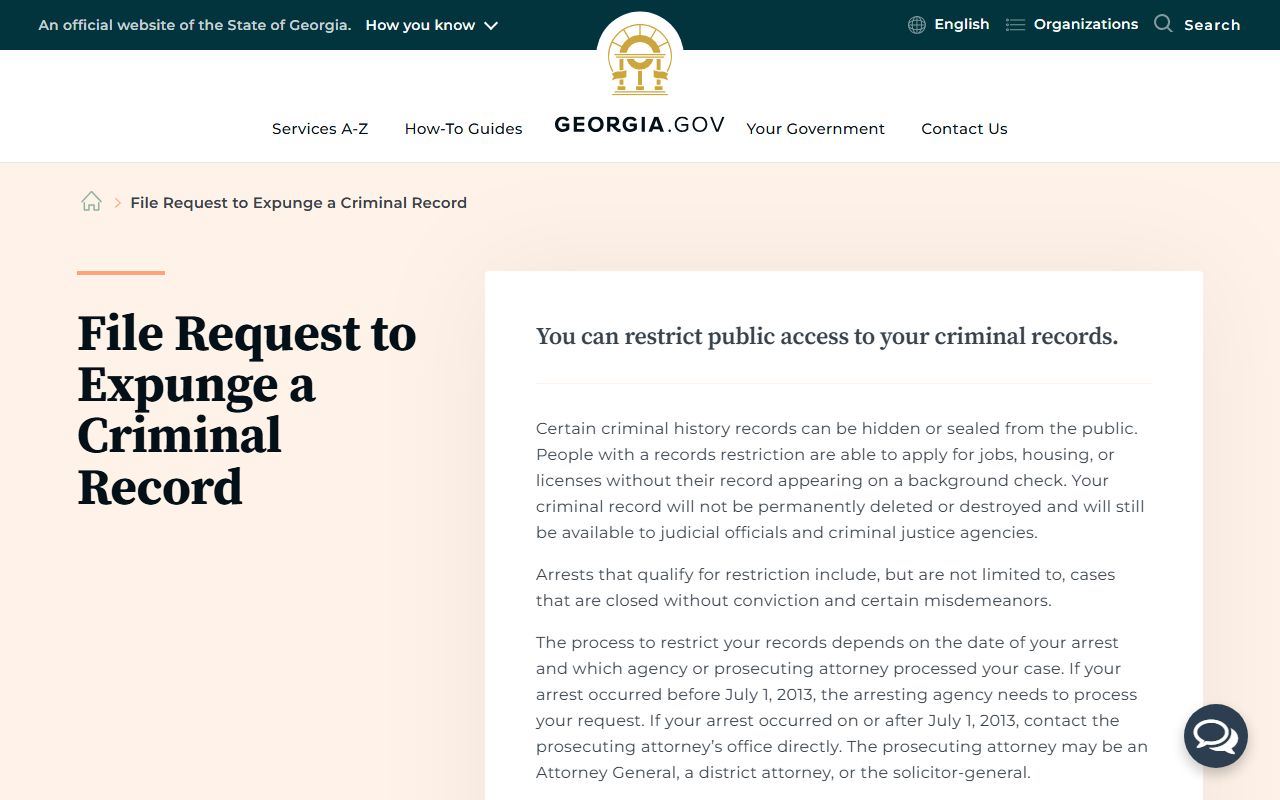
Use the Georgia.gov page as a quick checklist before you contact the arresting agency or the prosecutor.
How to Request Record Restriction in Cobb County
The path depends on the arrest date. Arrests before July 1, 2013 go through the arresting agency. Arrests after that date are often handled through the prosecutor and court at disposition. Most Cobb residents will follow these steps for an older arrest.
- Get a copy of your Georgia criminal history from the GBI Georgia Crime Information Center. You will need it to confirm what is on file and what may be eligible.
- Pick up or download the request-to-restrict form. The form has an applicant section, an arresting agency section, and a prosecutor section.
- File the form with the arresting agency. For a Cobb Sheriff arrest, that is the Cobb Sheriff Records unit at 770-499-4231. For a Marietta Police arrest, file with Marietta Police records.
- Pay the agency processing fee. Arresting agencies may charge up to $50 for pre-July 1, 2013 cases. The agency then forwards the request to the prosecutor.
- Wait for prosecutor review. The Cobb DA or Solicitor General will sign off if the case is eligible. For non-conviction cases this is usually a yes.
- Send the approved form to GCIC Record Restrictions with a $25 money order or certified check made out to the Georgia Bureau of Investigation. GCIC usually processes complete files in 2-3 weeks.
- Check your record again 4-6 weeks later. If the restriction took, the arrest will not show on a standard background check.
For free help, the Georgia Justice Project runs a record-restriction clinic. They handle Cobb cases.
Record Restricted vs Sealed Records
Georgia uses both terms. They are not the same thing. A restricted record is still alive. A sealed record is locked behind a court order. The table below shows the split.
| Record Restricted | Sealed | |
|---|---|---|
| Legal Basis | O.C.G.A. § 35-3-37 | Court order, statute, or rule |
| Who Can See It | Police, courts, prosecutors | Very few, often by petition only |
| Public Background Check | Hidden | Hidden |
| Record Destroyed? | No | No, but locked |
| Common Use | Arrest with no conviction, dismissed charge | Adoption files, some juvenile cases |
| How To Get It | Apply through agency and prosecutor | File petition with court |
Neither term means the record is gone. People sometimes assume a restricted file no longer exists. It does. It is just not on the open shelf.
What a Cobb County Criminal Record Shows
A criminal record pulled from a Cobb court portal or the Sheriff's inmate inquiry has a set list of fields. The exact mix varies by source. Below is a sample inventory drawn from a real Cobb Sheriff booking detail and the State Court records search.
| Field | What It Shows |
|---|---|
| Agency ID | The arresting agency code (Sheriff, Marietta PD, etc.) |
| Arrest Date / Time | When the arrest happened |
| Booking Started / Complete | When intake at the jail began and ended |
| Name and DOB Year | Full name and birth year only |
| Race / Sex | As listed at booking |
| SOID | Sheriff's Office Identification number, unique to the person |
| Location | Where the person is held, or RELEASED |
| Days in Custody | Running count from booking |
| Charges | OCGA code section, plain-text description, type, counts |
| Warrant Number | Tied to the arrest warrant |
| Case Number | Tied to the court file, if filed |
| Bond Amount and Status | Set bond plus statutory add-on fees |
| Attorney of Record | Lists counsel or "No Attorney of Record on file" |
| Release Information | Date, officer, released to, or "Not Released" |
For a full court file, the State Court or Superior Court portal will also show pleadings, motions, orders, disposition, sentence, and fees.
The Cobb DA and Solicitor General Roles
Two offices prosecute criminal cases in Cobb. They do not overlap. Use this section to find the right one for your case.
Sonya F. Allen, District Attorney
70 Haynes Street
Marietta, GA 30090
Phone: 770-528-3080
Fax: 770-528-3030
Email: cobbdistrictattorney@cobbcounty.gov
Web: cobbcounty.gov/district-attorney
The DA prosecutes all felony cases in Cobb Superior Court. That includes drug felonies, theft over the felony line, burglary, aggravated assault, robbery, and homicide. The DA also handles a Victim Witness Assistance Unit and runs diversion programs for some first-time defendants.
Makia Metzger, Solicitor General
10 East Park Square, Suite 300
Marietta, GA 30090
Phone: 770-528-8500
Fax: 770-528-8590
The Solicitor General prosecutes all misdemeanors, traffic offenses, and county ordinance cases in Cobb State Court. That covers DUI, simple battery, shoplifting under the felony line, possession of small amounts of marijuana, and most traffic crimes. For traffic record questions, see the Cobb County traffic court records page.
Cobb County Criminal Records That Are Restricted
Not every criminal record in Cobb is open. Some are off limits by statute. Some are locked by court order. The list below is the most common set you will hit when searching.
- Juvenile records, fingerprints, names, and photographs under O.C.G.A. § 15-11-702.
- Adoption files, sealed under O.C.G.A. § 19-8-23.
- Restricted criminal history under O.C.G.A. § 35-3-37.
- Mental health commitments handled in Cobb Probate Court.
- Grand jury proceedings before indictment.
- Active law-enforcement investigations under the Open Records Act exemptions in O.C.G.A. § 50-18-72.
- Trial exhibits, which need a judge's approval to inspect.
If you need a copy of a sealed file for a legal matter, you will likely need a lawyer to file a petition. The Cobb Circuit Public Defender handles court-appointed defense, but does not pull civil records. For free legal help on record clearing, contact the Georgia Justice Project or Atlanta Legal Aid, which serves Cobb residents.
State and Federal Criminal Records
Cobb data is only part of a person's full record. People move. They get arrested in other counties. They get convicted in federal court. To pull a full picture, you may need state and federal sources too.
The Georgia Department of Corrections runs an offender search for people serving state prison sentences. See the GDC offender info page or the georgia.gov find an offender explainer. The Georgia Bureau of Investigation runs the Georgia Sex Offender Registry, which is public for registered persons living in or moving to Cobb.
For federal cases, use the U.S. District Court for the Northern District of Georgia or PACER. For federal inmates, use the Federal Bureau of Prisons inmate locator.
Important: This site is not an FCRA-regulated consumer reporting agency. Cobb County criminal record results from this page must not be used for credit, employment, tenant, or insurance decisions.
What Is Public vs What Is Not
Adult criminal records in Cobb County are mostly public under the Georgia Open Records Act. The Act sits in O.C.G.A. § 50-18-70 and following. Court records have their own access rules layered on top. The short version: indexes and basic case data are public, but some documents are sealed or redacted.
Public: arrest dates, booking data, charges, court case numbers, dispositions for adult cases, sentences, conviction records, sex offender registry, court calendars.
Not public: juvenile names and photos, adoption files, restricted criminal history, sealed records, grand jury matters, active investigation files, mental health commitments, SSNs and financial account data, victim information in sensitive cases.
If a clerk denies a request, ask which statute applies. Common cites are O.C.G.A. § 50-18-72 for exemptions and O.C.G.A. § 35-3-37 for record restriction. The Georgia Attorney General publishes an open-government FAQ that can help. For broader background on public records access, see the Cobb County public records page.